The place
Ayia Napa and Protaras
The two resorts of the Famagusta district: Ayia Napa’s harbour and monastery, the family beaches of Protaras, and the sea caves of Cape Greco between them.
Find a cabaret night ↗Quick answer
Ayia Napa and Protaras are the two holiday resorts of the Famagusta district, on the far south-eastern corner of Cyprus, with the headland of Cape Greco between them. Ayia Napa is the larger and livelier, built around a Venetian-era monastery and a fishing harbour. Protaras, part of the Paralimni municipality, is quieter, with a reputation for families and beaches such as Fig Tree Bay.
A district split in two
Famagusta is one of the six districts of Cyprus, but most of it, including the city of Famagusta itself, has been under Turkish control since 1974. The smaller southern part, which holds both resorts, is under the control of the Republic of Cyprus, with its district administration based at Paralimni. That history explains why the day trip to Famagusta’s old town and Varosha involves crossing a checkpoint, while the cabaret and the beaches stay on the southern side.
Ayia Napa
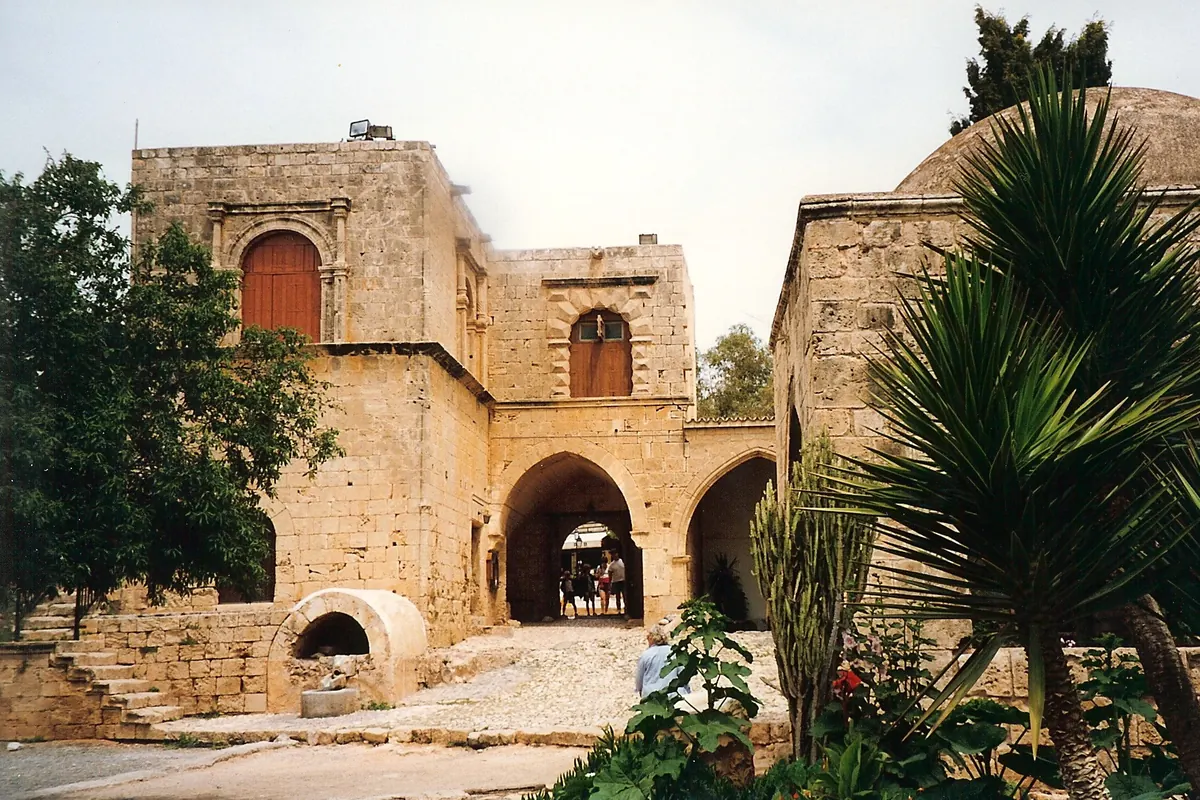
Ayia Napa sits at the far eastern end of the island’s southern coast and is its largest tourist resort. The name comes from the Venetian-era monastery in the town centre, beside the square that is now the heart of its nightlife; Ayia means holy, and Napa is an old word for a wooded valley. The monastery’s oldest walls are Byzantine, most of its buildings date from the fourteenth to the eighteenth centuries, and it now houses a museum. The fishing harbour, lined with painted boats, is the other place to start an evening walk.
The Red Villages
Ayia Napa belongs to a wider area known as the Kokkinochoria, the Red Villages, named for the vivid red colour of the soil. You will see that red earth from the coach on the way to the show, in the fields between the resorts and the villages inland. The red-bus day trip on this site takes its route through those villages on the way to the crossing.
Protaras
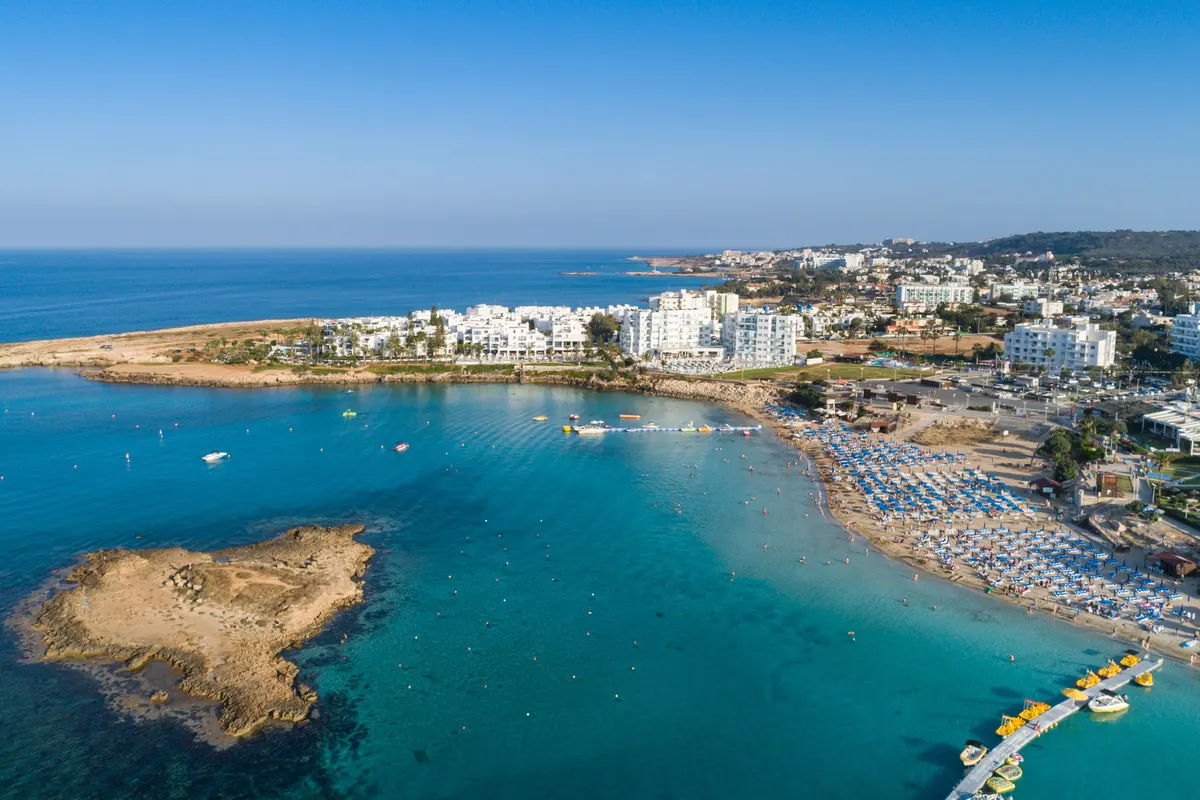
Protaras, on the far side of Cape Greco from Ayia Napa, is a resort under the municipality of Paralimni. It grew on the back of Ayia Napa’s success but kept a quieter character, with less of a club scene and a reputation for families and Cypriot holidaymakers. Its best-known beach is Fig Tree Bay, named for the fig trees near the shore, with a small islet you can reach by swimming through the shallows. The area is also known for its diving sites.
Cape Greco between them
Cape Greco is the headland that separates the two resorts and part of the Ayia Napa municipality. It is the easternmost point of the Republic of Cyprus’s government-controlled areas, and a national forest park whose limestone coast is cut into sea caves. In antiquity it was known as Cape Pedalion, and the hill above it was said to be sacred to Aphrodite. It is also an important stop for migrating birds, which makes the cape a good morning before an evening at the cabaret.
Evenings in the two resorts
Ayia Napa has long been known for its clubs, and the town has worked since the 2010s to broaden its offer with a marina, museums and a sculpture park. Protaras evenings are calmer, centred on restaurants and promenades. A cabaret night sits neatly between the two: a show built for a holiday crowd, with transport from either resort, that does not ask you to stay up until the clubs close.
Sources