The form
What a drag revue is
Where drag cabaret comes from, from male actors in women’s roles to pantomime dames, lip sync and the modern drag show, explained before your night out.
Find a cabaret night ↗Quick answer
A drag revue is a string of songs, comic routines and sketches by performers in drag, held together by a host rather than a plot. It draws on a long theatre habit of men playing women’s roles, on British pantomime’s dame, and on the modern drag show that grew up in American bars in the 1920s and 1930s. Expect impressions, costume changes, live or mimed singing and a lot of talk with the audience.
Men in women’s roles, for a very long time
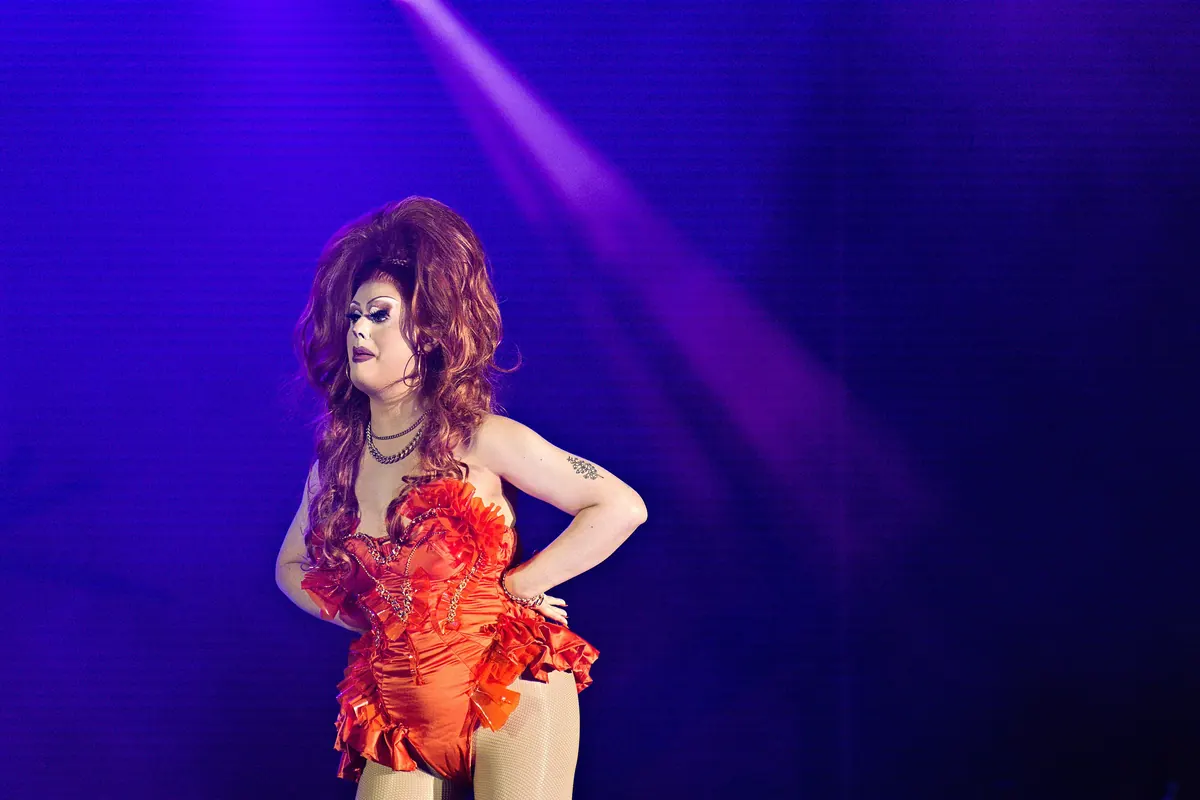
Female impersonation on stage goes back at least to ancient Greece, when male actors played the female roles. In Renaissance England women were forbidden from performing, so men and boys took those parts too. The word drag itself may reach back to the Elizabethan era, though its first recorded use in this theatrical sense dates from 1870. Through the nineteenth and early twentieth centuries, female impersonators worked in vaudeville, burlesque and the theatre, and some became famous for it.
The pantomime dame
For a British audience, the most familiar ancestor is the pantomime dame: a man in a big wig and heavy make-up playing a matronly woman, often the hero’s mother, in an over-the-top comic style. Dames are known for numerous costume changes, each more extravagant than the last. Anyone who grew up with Christmas pantomime already knows half the grammar of a drag cabaret, from the escalating outfits to the knowing asides to the audience.
The modern drag show
The drag show as a night-time entertainment took shape in the speakeasies and underground bars of Prohibition-era America in the 1920s and 1930s. Its basic ingredients have changed little since: performers singing or lip-syncing to songs, dancing, comedy and sketches, and interaction with the audience, often in elaborate costume and sometimes dressed to imitate famous singers. Touring shows carried the format across the United States in the following decades.
Lip sync and live vocals
Miming to a recording is often treated as a flaw in a pop concert, but in drag it is a craft. When the audience knows the performer is pretending, lip sync becomes a form of musical pantomime, and drag performers have made it their own. Many drag shows also include live singing. The show near Ayia Napa is billed with a live vocalist alongside its impressions, so you can expect a mix rather than a night of miming alone.
Cabaret, tables and the host
Cabaret is theatre for an audience sitting at tables, usually eating or drinking, with a master of ceremonies introducing the acts. The first cabaret in the modern sense opened in Paris’s Montmartre in 1881, and in the United States drag shows are among the acts often advertised as cabaret. The host, called a compère in older theatre language, links the numbers, talks to the room and keeps the night moving, which in drag cabaret often makes them the evening’s chief comedian.
Why it feels camp, and why that matters
Camp is the taste for things that are knowingly exaggerated and artificial, enjoyed partly because they are over the top. It has long appeared in film, cabaret and pantomime. A drag revue is camp on purpose: the wigs are meant to be too big and the glamour is meant to be noticed. Understanding that helps first-timers relax into it, because the show is laughing with its audience about the whole glittering performance, not asking anyone to take it at face value.
Sources